Condo And Townhome Living In Bellevue’s Urban Hubs
June 18, 2026
June 18, 2026
If you want a home that puts shops, parks, dining, and transit closer to your daily routine, Bellevue’s urban hubs deserve a close look. Condo and townhome living here can offer a very different experience from a detached house, with less exterior upkeep and more access to the city’s most active areas. The key is knowing what tradeoffs come with that convenience so you can choose a home that truly fits your lifestyle. Let’s dive in.
Bellevue’s downtown core is both the city’s main economic center and its fastest-growing residential neighborhood. The city describes downtown as a walkable urban area with retail, dining, entertainment, and a live-work feel that differs from a more traditional suburban pattern.
That matters if you want daily convenience built into where you live. Instead of prioritizing large yards and private driveways, Bellevue’s urban neighborhoods are designed around access, activity, and connected living.
Downtown Bellevue offers some of the city’s best-known amenities in a compact area. Bellevue Downtown Park, Old Bellevue/Main Street, Meydenbauer Bay Park, the Bellevue Collection, and the Bellevue Arts Museum all help shape the area’s day-to-day appeal.
The Bellevue Collection is a major draw, with more than 200 shops and a dining district with more than 50 restaurants. Bellevue Downtown Park adds a 21-acre green space right in the urban core, which gives downtown living a strong mix of city energy and open-air breathing room.
Downtown is not the only place where condo and townhome buyers should look. Bellevue’s nearby urban pockets offer different versions of a connected, lower-maintenance lifestyle.
The Spring District is planned as a dense, mixed-use neighborhood with offices, residential uses, parks, and open space. The city’s planning also emphasizes a pedestrian-oriented layout, which can appeal if you want a more transit-first environment.
BelRed is being transformed from light industrial uses into transit-oriented neighborhoods. Bellevue’s plans for the corridor include light rail, pedestrian and bike facilities, an arts district, and new parks.
Wilburton combines single-family and multifamily housing with parks, wooded areas, and future light-rail access. It also plays a role in the city’s Grand Connection vision, making it an area to watch if you want close-in access with a slightly different feel than downtown blocks.
Old Bellevue offers a more historic Main Street character with walkable blocks, boutiques, restaurants, and small businesses. It still feels urban, but in a way that is often more intimate than the larger downtown core.
For many buyers, the real question is not whether one property type is better. It is which daily lifestyle works better for you.
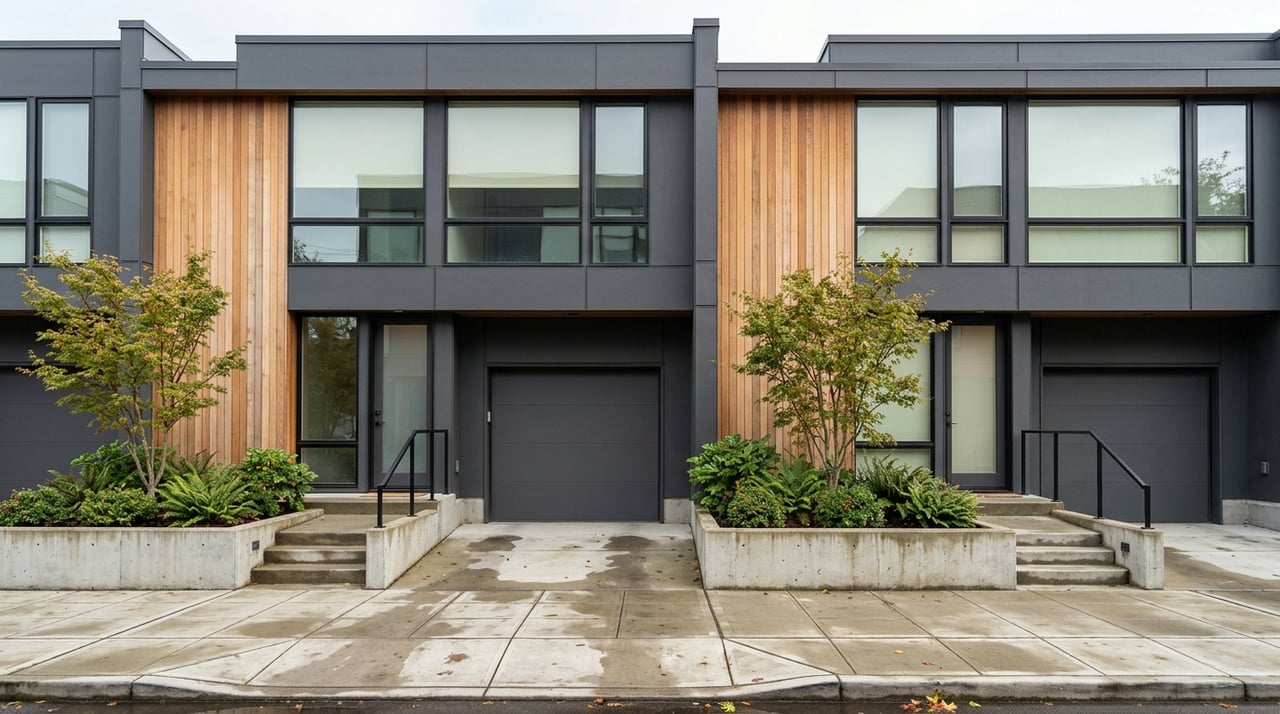
Condos often lean into convenience, shared amenities, and secure building access. Townhomes often offer more privacy, more levels, and features like garages or patios, while still keeping maintenance lower than a detached home.
Current downtown Bellevue condo listings show a wide size range. Studios run around 451 to 507 square feet, one-bedroom homes around 535 to 926 square feet, two-bedroom homes around 1,004 to 2,147 square feet, and three-bedroom homes around 1,544 to 2,972 square feet.
That range gives buyers options. You may find a compact, efficient home for a simpler lock-and-leave lifestyle, or a larger residence that feels more like full-scale urban living with added services and amenities.
Common condo features in Bellevue listings include:
Bellevue townhomes usually offer more interior space and a bit more separation from neighbors than a condo. Current listings range from about 987 to 2,552 square feet, with two- to four-bedroom layouts.
Many townhomes highlight practical features that buyers value in urban settings. These often include main-level entry, open-concept layouts, private patios, ensuite bedrooms, and attached or tandem garages.
Common townhome features in Bellevue listings include:
One of Bellevue’s biggest advantages is that the city is actively planning for multimodal living. The Downtown Transportation Plan focuses on improving roadways, transit, pedestrian and bicycle facilities, and traffic signal operations.
For you as a buyer, that means urban living here is not just about current convenience. It is also about a city that is continuing to invest in how people move through downtown and nearby neighborhoods.
Bellevue Downtown Station sits next to Bellevue Transit Center, which serves multiple King County Metro and Sound Transit routes. The station also includes bike parking options, reinforcing the area’s mixed-mode transportation design.
If you want flexibility in how you commute or get around, this can be a major benefit. You may still use a car, but you may not need to rely on it for every trip.
The Spring District is especially important for buyers who want a transit-oriented lifestyle. Bellevue notes that there is no commuter parking lot at the Spring District station, which signals that this area is designed around walking, biking, and transit access rather than large parking supply.
That setup can be a great fit if you value mobility and lower-maintenance living. It also means you should be realistic about parking needs before you buy.
Parking in Bellevue’s urban hubs is often structured, assigned, or shared. It is usually not the same experience as owning a detached home with a private driveway and extra curb space.
That is why parking details should be part of your home search from the start. In urban Bellevue, one parking setup can feel very different from another, even when two homes are close together.
As you compare properties, pay attention to whether parking is:
Old Bellevue also highlights a real-world part of urban living. The area is walkable and convenient, but visitor parking can fill quickly on surface streets, so daily routines and guest access are worth thinking through early.
With condos and many townhomes, the homeowners association plays a big role in how the property functions. In Washington, condos and townhome communities are private common-interest communities with recorded governing documents.
Those documents often include CC&Rs that address architectural standards, parking, pet rules, rental limits, and common-area use. Also important, a townhome may be legally organized as an HOA or as a condominium, so the legal structure matters just as much as the building style.
Monthly dues are important, but they are only part of the picture. Washington condo resale disclosures include details such as common-expense assessments, unpaid special assessments, other fees, anticipated repair or replacement costs above 5 percent of the annual budget, reserve balances, insurance information, and reserve-study status.
If an association does not have a current reserve study or has limited reserves, future major maintenance could create special assessment risk. That is why due diligence is not just paperwork. It directly affects your budget, your comfort level, and your long-term confidence in the home.
Key HOA questions to ask include:
Insurance is another area where Bellevue buyers should slow down and read the details. The Washington Office of the Insurance Commissioner explains that condo and townhome owners generally need an HO-6 policy, while the community carries a master policy for certain shared losses.
The challenge is that master policies are not all the same. Depending on the governing documents, coverage may be all-in, all-in excluding owner upgrades, or bare-walls coverage, which can change what you may need to insure inside your own unit.
Bellevue’s urban condo and townhome market works best when you match the home to the way you actually live. The right choice is usually less about the label on the property and more about the details that shape your routine.
Think about what matters most to you, such as transit access, parking setup, storage, pet rules, guest parking, dues, and whether you want a lively amenity-rich building or a quieter, more residential feel. In Bellevue, you can find both within a relatively short distance.
If you want help sorting through these tradeoffs, a finance-informed search can make a big difference. Comparing dues, reserve health, insurance structure, and parking terms alongside price helps you evaluate the true cost and fit of a home, not just the listing photos.
Whether you are buying your first urban home or looking for a more streamlined Eastside lifestyle, Bellevue offers strong options across downtown, Old Bellevue, Spring District, BelRed, and Wilburton. If you want guidance on which property type and location best fit your goals, connect with The Rachel Olson Group.
August 20, 2026
September 10, 2026
August 27, 2026
September 3, 2026
August 13, 2026
August 6, 2026
August 6, 2026
July 23, 2026
July 16, 2026
July 9, 2026
July 2, 2026
June 25, 2026
June 18, 2026
June 11, 2026
June 4, 2026
May 28, 2026
May 21, 2026
May 14, 2026
May 7, 2026
April 23, 2026
April 16, 2026
April 2, 2026
first time home buyer
Rachel Olson | March 24, 2026
A Guide for First-Time Homebuyers in 2026
March 24, 2026
March 5, 2026
February 19, 2026
February 5, 2026
January 15, 2026
January 1, 2026

December 18, 2025
December 4, 2025

November 21, 2025
The Rachel Olson Group is comprised of a team of local real estate professionals committed to selling some of the most desired homes in Greater Seattle. We are committed to providing top-notch service for our clients and helping them navigate what can be a tough Seattle market. Please contact us today to get a no-obligation analysis of your home value or to take a tour of a potential new home!